Blog
How to Choose the Right New Office Furniture for Your Business

Table of Contents
The right office furniture directly impacts employee productivity, wellbeing, and retention. British businesses waste an average of £1,200 per employee annually on furniture that causes discomfort and reduces efficiency. With UK workplace regulations requiring employers to provide suitable workstations under the Health and Safety (Display Screen Equipment) Regulations 1992, choosing appropriate furniture isn’t just about aesthetics it’s a legal and financial necessity.
This comprehensive guide walks you through every aspect of selecting office furniture that balances ergonomics, budget constraints, and workplace regulations whilst supporting your team’s long-term health and productivity.
Understanding Your Office Furniture Requirements
Before browsing catalogues or visiting showrooms, assess your actual workplace needs. The most expensive furniture isn’t always the right choice, and cheap alternatives often cost more in replacement and health-related absences.
Conducting a Workplace Assessment
Start by evaluating your current space and workforce requirements. Measure your office dimensions, accounting for doorways, windows, and fixed architectural features. Document how many employees work on-site daily versus those using hot-desking arrangements. Consider growth projections for the next 3-5 years to avoid costly refurbishment cycles.
Key Assessment Questions
- How many permanent desks versus flexible workstations do you need?
- What percentage of employees work standing versus sitting throughout the day?
- Do specific roles require specialised furniture (design studios, technical workshops)?
- What storage requirements exist for files, equipment, and personal belongings?
- Are there accessibility requirements for employees with disabilities?
Survey your team about their current furniture pain points. The Health and Safety Executive reports that musculoskeletal disorders cost UK businesses 8.9 million working days annually, with poor seating being a primary contributor.
Prioritising Ergonomics and Employee Wellbeing
Ergonomic furniture prevents the chronic pain and repetitive strain injuries that plague office workers. The UK’s Display Screen Equipment regulations mandate that employers provide adjustable seating and properly positioned monitors, but true ergonomic design goes further.
Essential Ergonomic Features for Office Chairs
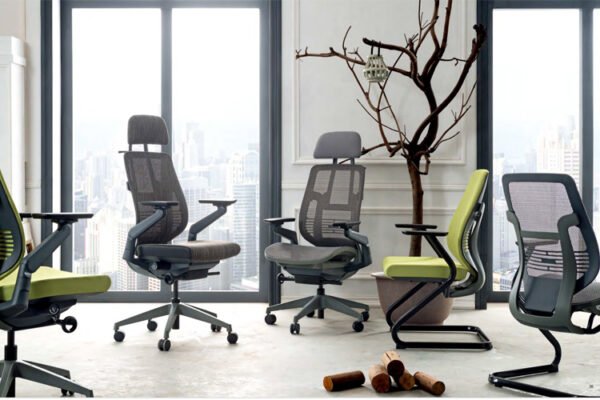
Quality office chairs must offer multiple adjustment points to accommodate different body types and working preferences. Look for chairs with adjustable seat height (allowing feet to rest flat on the floor), lumbar support that curves to support the lower spine’s natural shape, and adjustable armrests at elbow height.
| Ergonomic Feature | Purpose | Adjustment Range |
|---|---|---|
| Seat Height | Ensures proper leg and foot positioning | 40-55cm from floor |
| Lumbar Support | Maintains spine’s natural curve | Depth and height adjustable |
| Seat Depth | Supports thighs without pressure on knees | 5-10cm gap behind knees |
| Armrests | Reduces shoulder and neck strain | Height and width adjustable |
| Backrest Recline | Allows position changes throughout day | 95-120 degree range |
Seat depth matters significantly there should be approximately 5-10cm between the back of your knees and the seat edge. British Standard BS EN 1335 sets the specifications for office seating, ensuring products meet minimum safety and durability requirements.
Desk Selection and Height Considerations
Standard desk height of 72-74cm suits average-height workers, but this one-size-fits-all approach leaves many employees uncomfortable. Adjustable-height desks accommodate different body proportions and allow workers to alternate between sitting and standing throughout the day.
Research from Loughborough University found that sit-stand desks reduce reported back pain by 32% within the first month of use. If budget constraints make individual adjustable desks impractical, prioritise them for employees with existing back problems or those working longest hours at desks.
Important: When implementing sit-stand desks, educate employees on proper usage. Standing all day is as problematic as sitting continuously. Encourage alternating positions every 30-45 minutes and provide anti-fatigue mats for standing periods.
Budgeting for Office Furniture Investment
Office furniture represents a significant capital investment, but viewing it purely as a cost misses its impact on productivity and employee retention. Calculate your budget using cost-per-employee rather than just total expenditure.
Realistic UK Budget Ranges
| Quality Tier | Per Employee Cost | Expected Lifespan | Best For |
|---|---|---|---|
| Entry-Level | £800-£1,200 | 3-5 years | Start-ups, temporary spaces |
| Mid-Range | £1,200-£1,800 | 5-8 years | Growing businesses |
| Premium | £1,800-£2,500 | 8-12 years | Established companies |
| Executive/Specialist | £2,500-£4,000 | 10-15 years | Senior staff, specialist roles |
These figures include desk, chair, and basic storage. Add 10-15% for delivery, installation, and assembly costs. Many UK suppliers offer leasing arrangements spreading costs over 3-5 years, improving cash flow for smaller businesses.
Cost-Saving Strategies Without Compromising Quality
Negotiate bulk discounts when furnishing multiple workstations most suppliers offer 15-25% reductions for orders over 10 units. Consider mixing furniture tiers, investing more in items affecting health (chairs) whilst economising on less critical pieces (side tables, guest seating).
Refurbished and ex-display furniture from reputable suppliers offers substantial savings. Premium brands like Herman Miller and Steelcase retain functionality for decades, making quality refurbished pieces excellent value. Ensure refurbished items include warranties of at least 12 months.
Navigating UK Regulations and Safety Standards
British workplace furniture must meet specific legal requirements beyond general quality considerations. Non-compliance risks employee injury, legal liability, and potential Health and Safety Executive enforcement action.
Display Screen Equipment Regulations
The Health and Safety (Display Screen Equipment) Regulations 1992 require employers to assess workstation setups and reduce risks. This includes providing adjustable chairs, ensuring adequate workspace, and positioning monitors to prevent neck strain.
You must conduct workstation assessments when employees start using display screens, when workstation arrangements change significantly, or if employees report discomfort. Keep written records of these assessments for compliance purposes.
Fire Safety Requirements
The Furniture and Furnishings (Fire Safety) Regulations apply to office furniture containing upholstery. Look for permanent labels indicating compliance with cigarette and match resistance tests. Non-compliant furniture creates serious fire risks and potential legal liability.
Required Compliance Labels
All upholstered furniture should display labels stating: “CARELESSNESS CAUSES FIRE” followed by details of the manufacturer/importer and confirmation of compliance with the 1988 Regulations. Missing labels indicate non-compliant furniture that shouldn’t be used in commercial premises.
Selecting Furniture for Different Work Environments
Not all office spaces have identical requirements. Collaborative areas need different furniture from focused work zones, whilst reception areas serve entirely separate purposes.
Individual Workstations
Individual desks require sufficient surface area for computers, documents, and personal items without feeling cluttered. A minimum of 120cm width by 80cm depth accommodates most office work, though creatives and technical staff often need larger surfaces for multiple monitors or equipment.
Include adequate cable management trailing cables create trip hazards and look unprofessional. Built-in cable trays or grommets keep workstations tidy and safe.
Collaborative Spaces
Meeting rooms and breakout areas benefit from flexible furniture that reconfigures for different group sizes. Modular tables, stackable chairs, and mobile whiteboards create adaptable spaces supporting various working styles.
Consider acoustic properties in open collaborative areas. Sound-absorbing panels and strategic furniture placement reduce noise pollution affecting nearby focused work zones.
Reception and Client-Facing Areas
Reception furniture creates first impressions whilst serving practical purposes. Balance aesthetics with durability and comfort guests may wait for extended periods. Commercial-grade upholstery withstands heavier use than domestic furniture whilst maintaining appearance.
Storage Solutions and Space Optimisation
Inadequate storage creates clutter affecting both productivity and safety. The average office worker wastes 4.3 hours weekly searching for documents or supplies, according to research from the British Chambers of Commerce.
Personal Storage Requirements
Each employee needs secure storage for personal belongings, work documents, and supplies. Under-desk pedestals with lockable drawers provide immediate access whilst maintaining security. Allocate at least one lockable drawer per employee for valuables and confidential materials.
Shared Storage and Filing Systems
Centralised storage for shared resources and archives requires planning around both current needs and document retention requirements. UK GDPR regulations mandate secure storage for personal data, requiring lockable cabinets with restricted access.
Consider vertical storage solutions maximising floor space. Tall cabinets and wall-mounted units use otherwise wasted space, though ensure heavy items stay at accessible heights for safety.
Sustainability and Environmental Considerations
Environmentally conscious furniture choices reduce carbon footprints whilst often improving long-term value. Sustainable furniture typically uses higher-quality materials lasting longer, reducing replacement cycles and waste.
Certification and Materials
Look for FSC (Forest Stewardship Council) certification on wooden furniture, ensuring sustainable forestry practices. GREENGUARD certification indicates low chemical emissions, improving indoor air quality and employee health.
British manufacturers often provide lower carbon footprints than imported furniture due to reduced transportation. Additionally, UK production typically adheres to stricter labour and environmental standards.
Working With Suppliers and Delivery Logistics
Choosing the right supplier proves as important as selecting the furniture itself. Poor delivery coordination disrupts business operations, whilst inadequate after-sales support leaves you stranded when problems arise.
Evaluating Suppliers
Request samples or visit showrooms before making large orders. Photographs rarely convey build quality, comfort, or finish accurately. Sitting in chairs and examining construction reveals quality levels impossible to assess online.
Check warranty terms carefully. Reputable suppliers offer minimum 5-year warranties on seating and 10 years on desks. Verify what’s covered some warranties exclude normal wear or require specific maintenance procedures.
Delivery and Installation Planning
Coordinate deliveries to minimise business disruption. Large furniture installations work best during evenings, weekends, or periods when the office has reduced occupancy. Ensure delivery teams know about access restrictions, lifts, or narrow doorways that might complicate furniture movement.
Factor in assembly time flat-pack furniture takes longer than pre-assembled pieces but may be the only option for difficult access buildings. Clarify whether installation is included or charged separately.
Frequently Asked Questions
How much should I budget for office furniture per employee?
Budget £800-£2,500 per employee depending on furniture quality and your requirements. Entry-level setups cost £800-£1,200, mid-range £1,200-£1,800, and premium ergonomic solutions £1,800-£2,500. Factor in an additional 10-15% for delivery and installation costs.
What are the UK legal requirements for office furniture?
UK employers must comply with the Health and Safety (Display Screen Equipment) Regulations 1992, which require suitable seating, adjustable monitors, and adequate workspace. The Furniture and Furnishings (Fire Safety) Regulations also apply to upholstered furniture. You must conduct workstation assessments and provide adjustable chairs meeting British Standards.
How long should quality office furniture last?
Quality office chairs should last 7-10 years with proper maintenance, desks 10-15 years, and filing cabinets 15-20 years. Look for warranties of at least 5 years on seating and 10 years on desks as indicators of expected lifespan. Premium brands often last significantly longer, making them better long-term investments.
Should I buy new or refurbished office furniture?
Refurbished furniture from premium brands offers excellent value, particularly for chairs and desks from manufacturers like Herman Miller or Steelcase. Ensure refurbished items include warranties and come from reputable suppliers. New furniture provides the latest ergonomic features and full warranties but costs more upfront.
What’s the difference between home office and commercial office furniture?
Commercial office furniture uses heavier-duty construction, more robust mechanisms, and commercial-grade upholstery to withstand daily use by multiple users. It typically offers longer warranties and meets specific British Standards. Home office furniture is lighter, less durable, and unsuitable for commercial workplace requirements.
Do I need sit-stand desks for all employees?
Whilst sit-stand desks benefit most workers, budget constraints often require prioritisation. Focus on employees with existing back problems, those working longest hours at desks, or roles requiring extended concentration. Alternatively, consider sit-stand desk converters as a cost-effective way to provide adjustability without replacing entire desks.
How do I ensure office furniture accommodates employees with disabilities?
Under the Equality Act 2010, employers must make reasonable adjustments for disabled employees. This includes adjustable-height desks, specialised seating with additional support, accessible storage, and adequate manoeuvring space for mobility aids. Consult occupational health specialists and the affected employees to identify specific requirements.
Ready to Transform Your Workplace?
You might also like

How Office Furniture Impacts Productivity in the Workplace